

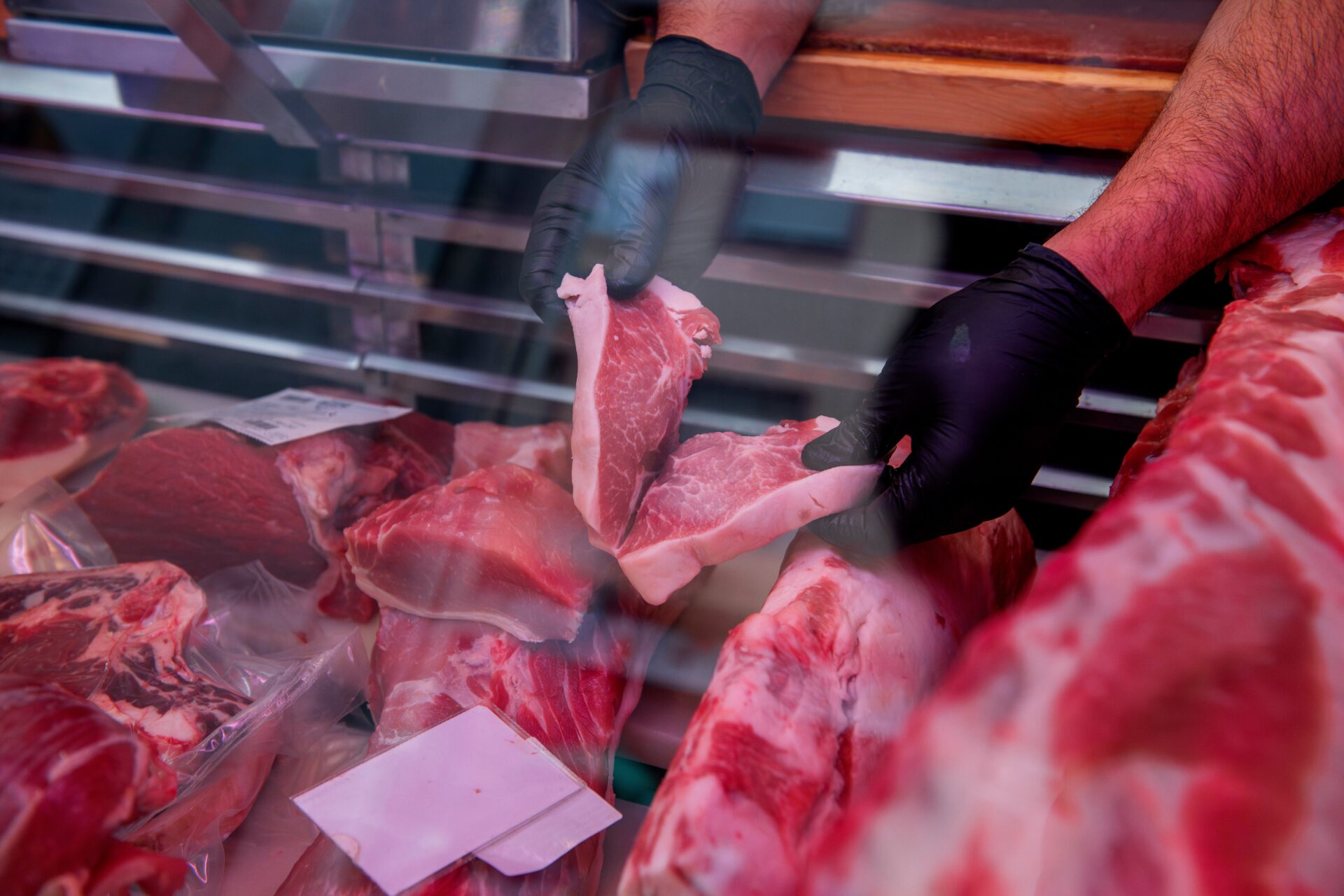
Familiar USDA grading systems, such as those for beef at your local store, are becoming more technologically advanced to ensure greater consistency and quality for consumers and retailers alike. Robert Eaton at the Agricultural Marketing Service explains how artificial intelligence is being used as a time- and cost-saving tool for meat grading.
The use of this technology for grading is not limited to beef; as Eaton’s colleague Charles Parr puts it, weeks of development have made it an instrumental tool for grading other consumer goods, such as rice. He dives into what makes it a great tool for grading rice and the benefits it offers for both producers and consumers.
Barbara Meredith, also a staff member with the Agricultural Marketing Service, shares how automated grading has been used for cotton for many years now. Meredith says that, with high-volume instruments being the gold standard for measuring cotton quality, the Agricultural Marketing Service instrument provides that measurement with great precision and efficiency while reducing operation costs.
When grading agricultural commodities such as meat and grains, uniformity within each grade is usually the desired result. Although manual grading has been the norm for decades, it can sometimes fall victim to human subjectivity and inconsistencies. Grading automation aims to bridge that gap by providing uniformity across all scales.

