

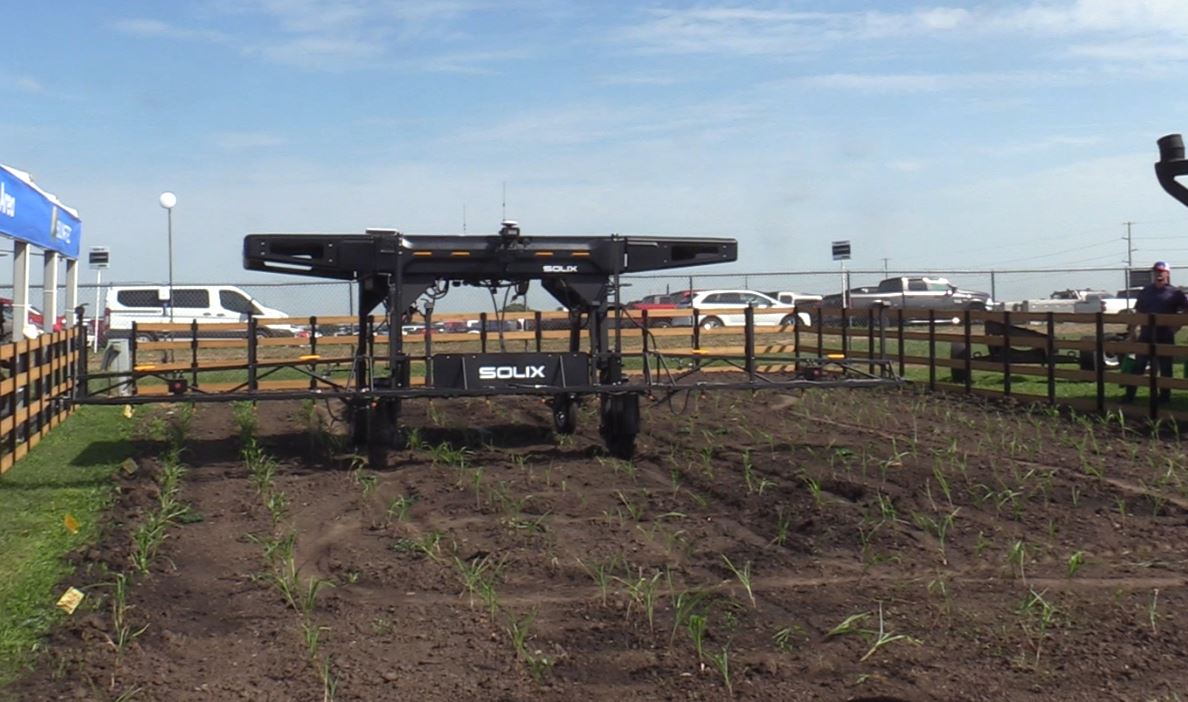
Autonomous equipment is becoming increasingly common in agriculture, but Solinftec is taking the concept beyond simply removing an operator from the cab. Its SOLIX robot is designed to remain in the field, continuously scouting for weeds and treating them as they appear.
Solinftec showcased the technology at the 2026 Farm Progress Show. Guilherme Guiné, COO for Solinftec North America, said the company currently has SOLIX operating across 13 states and Puerto Rico. The autonomous robot uses solar panels to recharge its batteries while working and can scout crops and conduct targeted herbicide applications at the same time.
Rather than scouting a field, creating a prescription map and returning later to spray, SOLIX combines those jobs into a single pass. Eight cameras mounted across a 40-foot boom use AI vision to distinguish the crop from weeds and determine where herbicide should be applied.
Guiné said that targeted approach can reduce herbicide use by as much as 85 percent compared with treating the entire field.
Continuous operation is another key part of the system. Instead of making one scheduled pass through a field, SOLIX can remain with the crop and repeatedly scout for emerging weeds.
That can be particularly useful with troublesome weeds such as waterhemp. Guiné said treating weeds while they are small can make them easier to control rather than allowing them to grow before the next conventional application.
Solar power allows the robot to continue operating without returning for fuel or battery charging, but around-the-clock operation does not mean it sprays regardless of conditions.
Farmers can establish parameters for factors including wind speed, temperature and humidity. SOLIX uses weather information along with an integrated weather station to determine whether those conditions are within the farmer’s limits. If wind speeds become too high, for example, the robot can stop and then resume work when conditions improve.
Solinftec has also developed an automated refill station to further reduce the amount of attention required from an operator. When SOLIX begins running low on product, the robot can travel to the station, connect to it, refill and return to the field. The solar-powered station also monitors its own telemetry and can continuously agitate products that require it.
Guiné said Solinftec’s approach is ultimately built around keeping the machine in the field and treating weeds early and often, while reducing chemical use and the labor required to make repeated applications.

