

With margins tight and input costs only going up, it?s more important than ever for farmers to get the most out of every seed that goes into the ground. While it?s easy to spend hours talking about variety selection and crop protection products, it?s also important to spend some time thinking about crop residue management, as well as the soil profile itself.
One of the residue management practices we hear a lot about is vertical tillage. However, C.J. Parker, Case IH Tillage & Pull-Type Fertilizer Marketing Manager, said there are some misconceptions about vertical tillage.
?There’s a variety of definitions out there, and what I really want the farmer to look at when he hears the word vertical tillage is how that customer wants to handle their residue, and ultimately that’s what vertical tillage is trying to do,? Parker said. ?Do we want to be more of a conventional tillage and be aggressive with that residue and bury it and make the soil blacker and darker so to speak, or do we want to leave a little bit more of that residue on top of the surface to have more of a conservation tillage look to managing our residue.?
Parker said there are many other reasons a farmer may want to consider using vertical tillage.
?Typically, the vertical tillage machines operate anywhere from that six to nine mile an hour range, so we’re able to cover the acreage relatively fast and create a good seed bed as well,? Parker said. ?Another use case for vertical tillage as we’re heading into spring here, maybe you need to help air that soil out and maybe dry it out a little bit in addition to warming that soil up as well to get the seeds to germinate when the planter goes through the field.?
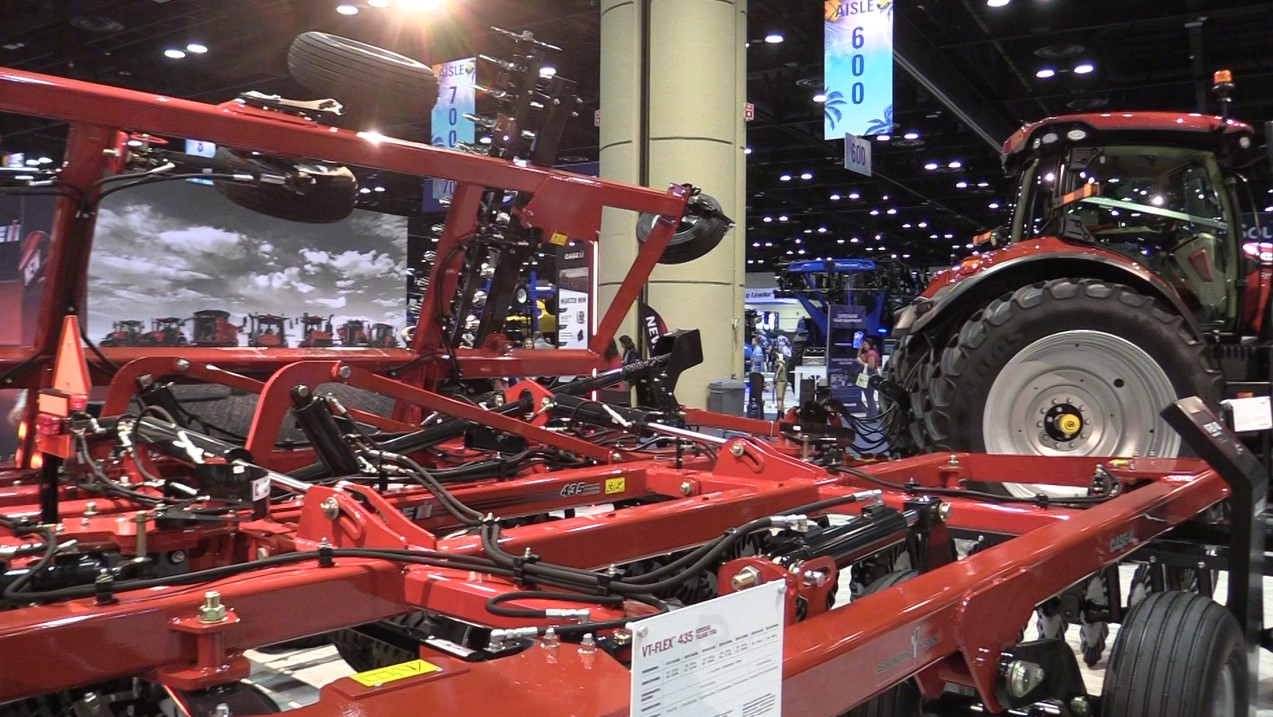
Vertical tillage is more than just a single tool, but equipment is part of the operation and there are many options on the market. Parker said Case IH has three vertical tillage offerings.
?The first vertical tillage machine that we offer is the 335VT,? Parker said. ?These run at an 18-degree gang angle with a 20-inch VT Wave blade. That blade has a little bit of concavity to it to help throw some soil horizontally that creates a real flat seed bed floor. The other option that we have is the 335 Barracuda, 22-inch serrated blade, with a lot more concavity to it. It’s going to really make that soil a little bit darker, bury more of that residue. And then finally was the VT-Flex 435. This machine has that same VT Wave blade as a 335VT, and we’re given that farmer the ability to change that gang angle independently from front to rear from zero degrees to 12 degrees.?
For more information, visit www.caseih.com or talk with your local dealer.

