

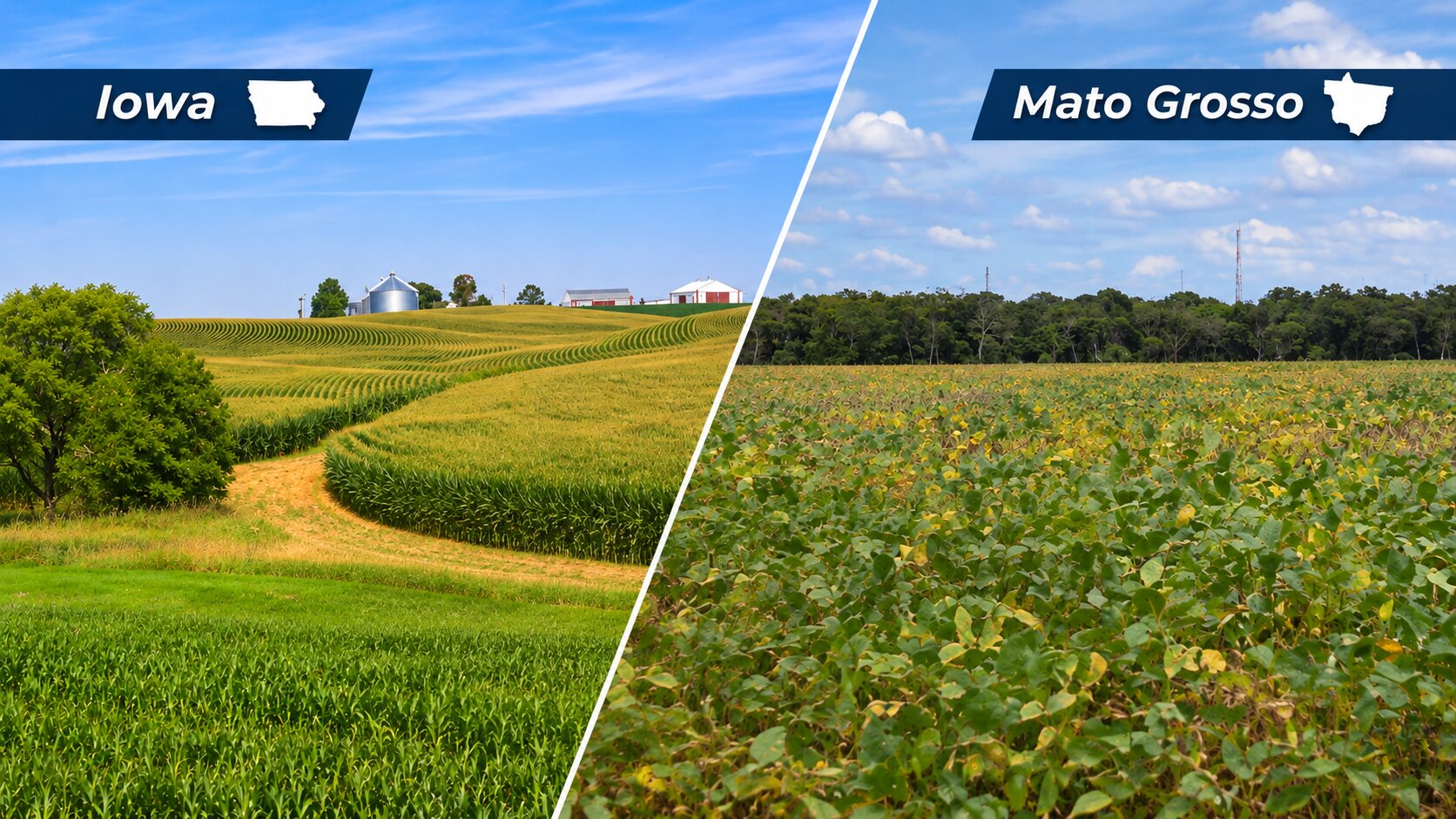
Iowa soybean farmers have long competed with Brazilian producers for a share of the global marketplace. One advantage Brazilian farmers have historically enjoyed is lower farmland costs. However, new research from Purdue University shows that the gap in farmland values between Iowa and Brazil has narrowed considerably over the past two decades.
Joana Colussi, a research assistant professor at Purdue University, compared farmland values in Iowa with those in Mato Grosso, Brazil’s largest soybean-producing state. She says both regions have experienced significant increases in land values since 2002, although the pace of those increases has been different.
In 2002, average Iowa farmland values stood at approximately $2,100 per acre. By 2025, that figure had climbed to around $11,500 per acre. Meanwhile, farmland in Mato Grosso increased from approximately $1,300 per acre in 2002, with particularly sharp increases during periods of stronger commodity prices.
Colussi says Brazilian farmland values doubled between 2010 and 2014 before more than doubling again between 2020 and 2022. Those increases brought farmland values in Mato Grosso close to those in Iowa, significantly reducing a historical price advantage for Brazilian producers.
However, more recent market conditions have caused the gap to widen again.
Colussi says declining soybean and corn prices since their recent peaks have affected farmland markets in both countries. However, Iowa farmland values have remained relatively stable, while values in Mato Grosso have declined.
By 2025, Iowa farmland was valued 27 percent higher than comparable farmland in Mato Grosso.
Brazilian producers have faced declining farm revenues, rising input costs, and large grain supplies that have slowed farmland transactions. Iowa farmers are dealing with many of those same financial pressures, particularly tighter profit margins and elevated production expenses.
Despite those challenges, farmland values in both regions remain historically high.
Looking ahead, Colussi says improving commodity prices could provide some support for Brazilian farmland markets, while the outlook for Iowa remains relatively stable.
Strong demand for agricultural commodities, geopolitical tensions, and concerns about potential El Niño impacts on crop production have recently provided some support for corn and soybean prices.
If those stronger prices continue, Colussi says conditions in Brazil’s farmland market could improve in 2027.
In Iowa and across the United States, lower crop prices, high production costs, and elevated interest rates continue to put pressure on farmland markets. However, the longer-term outlook remains relatively positive, with values expected to change little as markets adjust.
Colussi also points to the Purdue University/CME Group Ag Economy Barometer, where the Long-Term Farmland Value Expectations Index has fluctuated in recent years but remains above levels recorded before 2020.
For Iowa soybean producers, the comparison highlights how the economics of farmland ownership are changing in one of their biggest international competitors.
While Brazil has historically benefited from lower farmland values, that advantage has become considerably smaller over the past two decades. However, farmland prices represent only one part of the overall cost of producing soybeans, and differences in production expenses, transportation, and other factors continue to influence competitiveness in global markets.
With farmers in both Iowa and Brazil facing tighter margins, the ability to manage costs and maintain profitability remains an important factor in determining their competitive positions.
